
Introduction: What is Dengue Fever?
Dengue fever is a viral infection caused by the dengue virus (DENV), transmitted to humans through the bite of an infected Aedes aegypti mosquito. Common in tropical climates—especially during the monsoon season—Dengue is often called "breakbone fever" due to the intense joint and muscle pain it causes.
1. Early Symptoms of Dengue Fever
Symptoms usually appear 4 to 10 days after a mosquito bite. Early detection is critical for effective management.
-
Sudden High Fever: Often reaching 103°F or 104°F.
-
Severe Pain: Intense headache and pain behind the eyes (retro-orbital pain).
-
Joint and Muscle Pain: Deep aches in the bones and joints.
-
Skin Rash: A flat, red rash that may appear a few days after the fever begins.
-
Extreme Fatigue: Feeling unusually weak or exhausted.
2. When to Consult a Doctor
If you experience a high fever and severe body aches, consult a General Physician (MD Medicine). Do not wait more than 24 to 48 hours for the fever to "subside on its own."
What to Expect During a Hospital Visit
-
Physical Exam: Vital signs like blood pressure and pulse are checked.
-
Diagnostic Blood Tests: You will need a Dengue NS1 Antigen test and a CBC (Complete Blood Count) to monitor your platelet count.
-
Supportive Care: Treatment focuses on IV fluids for hydration and Paracetamol for fever.
?? Emergency Warning Signs: Severe Dengue (DHF)
Seek immediate emergency care if the following symptoms appear, usually in the 24–48 hours after the fever drops:
Severe abdominal pain or persistent vomiting.
Bleeding from the gums or nose.
Blood in urine or stools (or black, tarry stools).
Rapid breathing or difficulty breathing.
Extreme restlessness, confusion, or lethargy.
3. The "Secondary Infection" Risk: Can You Get Dengue Twice?
Many people wonder if they are immune after one infection.
-
The Reality: There are four different strains (serotypes) of the Dengue virus.
-
The Risk: Getting infected once only provides immunity to that one specific strain.
-
Medical Authority Insight: A second infection with a different strain actually increases the risk of developing Dengue Hemorrhagic Fever (DHF), making medical supervision even more critical for repeat cases.
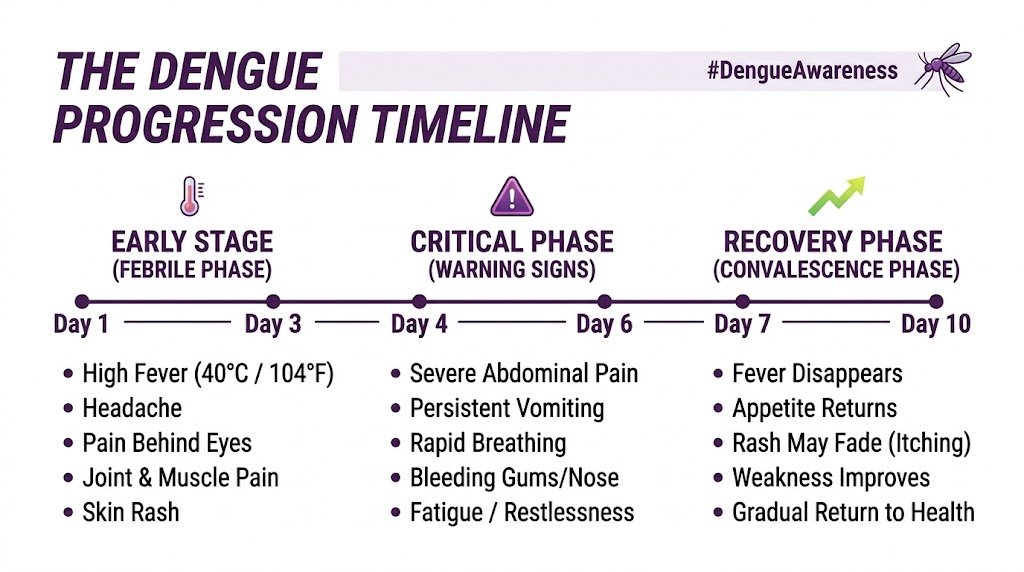
4. The 10-Day Dengue Recovery Timeline
Understanding the phases helps patients manage expectations and recovery.
-
Days 1–3 (Febrile Phase): High fever and intense body aches.
-
Days 4–6 (Critical Phase): Fever drops, but the risk of plasma leakage is highest. Weakness is at its peak.
-
Days 7–10 (Recovery Phase): Appetite returns and strength begins to stabilize.
5. Essential Diet for Dengue Patients
-
What to Drink: Tender coconut water, ORS (Electral), pomegranate juice, and orange juice.
-
What to Eat: Moong dal khichdi, porridge (dalia), and boiled vegetables.
-
What to Avoid: Oily/spicy foods, caffeine, and dark-colored foods (like beetroot or chocolate), which can interfere with doctors identifying internal bleeding in stools.
6. Common Myths vs. Medical Facts
-
Myth: Papaya leaf juice is a "cure."
-
Fact: No clinical evidence proves it kills the virus. Hydration is the only proven treatment.
-
-
Myth: You only need to worry while you have a fever.
-
Fact: Complications usually occur after the fever goes away.
-
-
Myth: Platelet transfusion is always needed for low counts.
-
Fact: Usually only required if platelets fall below 10,000–20,000 or if there is active bleeding.
-
7. Precautions and Prevention
-
No Painkillers: Avoid Ibuprofen (Combiflam) and Aspirin, as they increase bleeding risks. Use only Paracetamol.
-
Mosquito Protection: Use nets and repellents to prevent spreading the virus to family members.
-
After Recovery: Wait 1–2 weeks before returning to heavy exercise. Clear any standing water in your home to prevent breeding.
Frequently Asked Questions (FAQ)
How long does Dengue last?
The active infection typically lasts 7 to 10 days, though fatigue can persist for weeks.
Does a low platelet count always mean I have Dengue?
No. Other viral infections, Malaria, or Typhoid can also cause low platelets. A specific Dengue test is required for confirmation.
Is Dengue contagious from person to person?
No. It does not spread through touch or air. It only spreads via the bite of an infected Aedes mosquito.
Why should I avoid dark-colored foods?
Dark foods like beetroot or dark chocolate can change the color of your stool, making it difficult for doctors to detect gastrointestinal bleeding.
Can you have Dengue without a fever?
Yes. While a high fever is the most common symptom, "afebrile" Dengue is possible. You may only experience severe body aches, a skin rash, or extreme weakness. In some cases, the fever may be very low-grade and go unnoticed, or the patient may enter the "critical phase" very quickly. If Dengue is spreading in your area and you feel unusually exhausted or have intense joint pain, get a blood test regardless of your temperature.
How can I protect myself if Dengue is spreading in my area?
Prevention is your best defense. Since Aedes mosquitoes bite primarily during the day:
-
Wear Protective Clothing: Opt for long-sleeved shirts and full trousers.
-
Use Repellent: Apply DEET-based repellents on exposed skin.
-
Check Standing Water: Empty flower pots, tires, and coolers weekly.
-
Screen Your Home: Keep windows closed or use mesh screens.
How should I take care of elders when Dengue is spreading? Elders are at a higher risk of complications due to pre-existing conditions (like diabetes or heart disease).
-
Early Testing: Even a mild fever in an elder should be tested immediately.
-
Hydration Monitoring: Ensure they drink small amounts of fluids frequently, as elders dehydrate faster.
-
Monitor Medications: Consult their doctor to see if they need to temporarily pause blood thinners (like Aspirin) if they test positive.
-
Fall Prevention: Dengue causes severe dizziness; ensure they have support when walking.
Conclusion
Dengue is serious but manageable. By staying hydrated, avoiding the wrong painkillers, and watching for Emergency Warning Signs during the critical phase, most people make a full recovery. If you suspect Dengue, contact your doctor for a CBC test immediately.
Specialist doctor at MS Galaxy Hospital Dehradun.
View Doctor Profile →